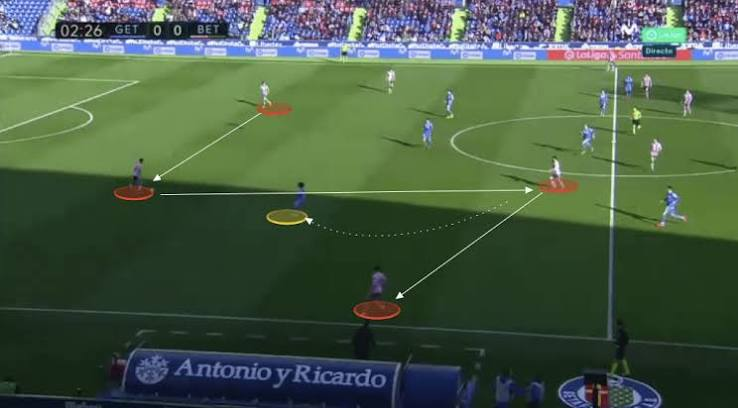

In the 2017/2018 La Liga season, the league’s coaches imposed distinct tactical identities that heavily influenced how matches unfolded, often more than raw league position alone. For anyone trying to decide which side to back before kick-off, understanding those tactical fingerprints—pressing intensity, block height, risk with the ball—offered a more grounded basis for selection than simply looking at recent scores or star names.
Why Tactical Identity Matters for Side Selection
Coaches determine how their teams trade space for control, attack for safety, and intensity for stamina, and those trade-offs drive chance volume and game state. A side playing in a compact 4‑4‑2 with limited pressing will produce different match patterns from one using an expansive 4‑3‑3 that pushes full-backs high, even if their squad quality is similar. The outcome is that teams with coherent, repeatable tactical structures tend to produce more predictable performance profiles, which makes them easier to trust in pre‑match decisions than sides constantly shifting shape or identity.
The Tactical Landscape of La Liga 2017/2018
The 2017/2018 season sat in the middle of a broader tactical evolution in La Liga, with research showing a shift toward 4‑4‑2 and related structures becoming more common from 2017/18 onwards. While possession-heavy, high-pressing football remained prominent at Barcelona and parts of Real Madrid’s game model, a growing number of clubs leaned into compact mid-blocks, double striker systems and more direct transitions. This split created a league where some matches were territorial sieges controlled by the favourite, and others were more balanced tactical battles decided by pressing traps and counter-attacks.
Key 2017/2018 Coaches and Their Tactical “Signatures”
Several head coaches gave their teams clear on-pitch signatures that influenced both results and betting perception. Ernesto Valverde’s Barcelona blended a more controlled, pragmatic version of possession football with Lionel Messi’s creativity, producing a side that conceded very few goals and often managed game tempo rather than chasing big scorelines at all costs. Zinedine Zidane’s Real Madrid maintained a flexible shape, oscillating between high-pressure phases and more passive mid-blocks, but 2017/2018 analysis highlighted issues with defensive transitions and consistency in league play. Diego Simeone’s Atlético Madrid continued with a compact, resilient defensive style, typically in a 4‑4‑2 structure, prioritising block organisation and efficient attacks over sustained high possession.
Mid-table coaches also imposed distinct ideas: some emphasised aggressive pressing and vertical attacks, others stayed in low blocks and relied heavily on set pieces or individual forwards. For side selection, knowing which cluster a coach belonged to often mattered as much as knowing where his team sat in the table.
Mechanism: How Tactics Translate into Edges or Vulnerabilities
The mechanism linking these tactical signatures to betting decisions runs through how each style behaves under different match conditions.
- Possession‑dominant teams generally control territory and shot volume against weaker opponents, making them more reliable favourites at home but sometimes vulnerable to fast counter-attacking sides.
- Compact defensive teams keep games close, reducing variance but also limiting their own scoring ceiling, which can make big handicaps unattractive even when they are superior.
- High‑pressing, vertical sides create chaotic matches where they can overwhelm weaker build‑up teams but may suffer if opponents can play through their press.
Recognising these patterns allows you to see when a favourite’s tactical strengths align with an opponent’s weaknesses, and when stylistic clashes instead favour the underdog.
A Structured Checklist for Reading Tactics Before Choosing a Side
Rather than relying on intuition, you can turn tactical reading into a repeatable pre‑match checklist anchored in the 2017/2018 context. Before making any side decision, ask how each team’s coach is likely to approach the game in four dimensions: block height, pressing, width, and risk on the ball.
One practical way to organise this is as a short, written grid or mental model that you fill in before looking at odds.
- Team A: defensive line (high, mid, low), pressing style (aggressive, situational, passive), main attacking route (wings, half-spaces, long balls), game state behaviour when leading or behind.
- Team B: the same fields, then a line noting where styles clash or complement each other.
By forcing yourself to articulate these elements, you move from vague impressions to concrete cause–effect relationships: “Team A’s aggressive press into Team B’s shaky build-up” or “Team B’s low block against Team A’s cross−heavy attack,” each with implications for which side has the more robust tactical advantage over 90 minutes.
Examples of Tactical Clashes that Influenced 2017/2018 Matches
Specific 2017/2018 fixtures highlight how tactical contrasts swayed matches beyond raw talent. Real Madrid’s struggles in parts of the league campaign were often linked in tactical analyses to problems defending central spaces when their full-backs advanced and their midfield failed to control transitions, leaving them open to organised counters. In contrast, Barcelona’s more measured possession under Valverde, combined with a disciplined defensive structure, delivered long unbeaten runs and lower concession numbers than some prior seasons.
Atlético Madrid’s continued success came from their ability to compress space in their own half, forcing opponents into low-quality shots and punishing mistakes with direct, high‑value transitions once possession was won. When backing or opposing teams in this environment, recognising that type of clash—open transition vs compact control—mattered more than simple “home favourite vs away underdog” framing.
Table: Stylised Tactical Archetypes and Side-Selection Implications
To clarify how tactical archetypes feed into decisions, it helps to summarise them in a compact format using patterns evident in La Liga during that season.
| Tactical Archetype | Typical Shape / Behaviour | Side-Selection Implication |
| Possession controller (e.g. Barcelona) | High line, patient build-up, wide overloads | Reliable vs deep blocks, vulnerable to fast counters |
| Compact counter-attacker (e.g. Atlético) | Mid/low block, 4‑4‑2, direct transitions | Strong as underdog or small favourite in tight games |
| Volatile transitional side (some mid-table teams) | Variable block, heavy pressing phases | High upside vs weak build-up, higher variance overall |
| Reactive low-block struggler (relegation candidates) | Deep line, limited pressing, long clearances | Hard to trust as favourite, occasionally value as big underdog |
These archetypes are simplifications, but they make it easier to ask the right question: “Does Team A’s tactical core naturally exploit Team B’s weaknesses, or does it walk into what B does best?” When that comparison favours the favourite and the market has not fully priced it, backing them becomes more rational; when it favours the underdog, taking a handicap or double-chance position can be justified.
Where Tactical Reading Strengthens or Weakens a Pre‑Match Edge
Tactical reading strengthens your edge when it adds information not fully reflected in headline form or simple metrics. For example, a side whose recent results look poor might actually be facing a sequence of stylistically awkward opponents—press-resistant teams against a pressing coach, or quick transition sides against a high line—so their underlying plan remains sound despite short‑term struggles. Recognising that helps avoid overreacting to bad patches and misjudging a coach’s long-term effectiveness.
Conversely, tactical assumptions can weaken your edge if they are not updated. Coaches adjust systems mid-season, change formations or tweak pressing schemes; an analysis built on early‑season patterns can quickly become stale. The burden is on the bettor to cross‑check with recent matches, line-ups and media reports that confirm a coach is still committed to the same core ideas rather than has shifted, for example, from an aggressive press to a compact mid-block after a series of costly defeats.
Integrating Tactical Views When Comparing casino online Prices
In remote betting environments, tactical understanding works best as a filter applied before you look at prices, not as a justification after the fact. Once you have a tactical expectation of how a La Liga match will unfold—who will dominate territory, which side is more likely to struggle in build-up, where transitions will occur—you can then evaluate whether the odds on a casino online website align with that view or push too strongly toward a narrative driven by recent scores. If tactical analysis points to a close, cagey game but prices strongly assume a high-scoring blowout for the favourite, that misalignment becomes a signal to either stay away or consider positions that benefit from a tighter match than expected.
This approach also helps prevent overconfidence in famous names: a big club playing in a tactically uncomfortable matchup—facing a compact, counter-focused opponent that historically troubles them—may be less attractive at short prices than a smaller but well‑prepared team whose game plan directly targets the favourite’s gaps. In both cases, tactical reasoning shapes how you interpret what the price is actually asking you to believe about the game.
Using UFABET Inside a Tactics-First Workflow
When you build your decisions around tactical reading, bookmakers become tools for execution rather than sources of analysis. After forming a view based on 2017/2018-style patterns—considering how each coach sets their block, presses, and attacks—you can scan several operators to identify where the odds diverge most from that view, whether for sides, handicaps, or goal-related markets. In that broader scan, a bettor might occasionally incorporate a betting destination like ufabet168 as one of the checkpoints, comparing its La Liga prices with others to see whether it leans more heavily into reputation or recent form in ways that either align with, or contradict, the tactical model already constructed. When a gap appears—say, a compact underdog priced longer there than elsewhere despite a favourable stylistic matchup—that discrepancy can influence stake placement while leaving the core, tactics-driven reasoning unchanged.
Summary
Reading La Liga coaches’ tactical profiles in 2017/2018 offered a structured way to choose sides that went beyond league tables and short-term form, grounding decisions in how teams actually tried to win matches. By mapping each coach’s typical block height, pressing intensity and attacking routes, then comparing those patterns across specific matchups, bettors could better anticipate which side’s game plan was likely to function more smoothly over 90 minutes. When paired with disciplined cross‑market price checks across remote betting outlets, that tactics‑first approach turned stylistic insights from that season into a practical decision tool rather than a set of abstract observations about how Spanish football looked on paper.